About the Course
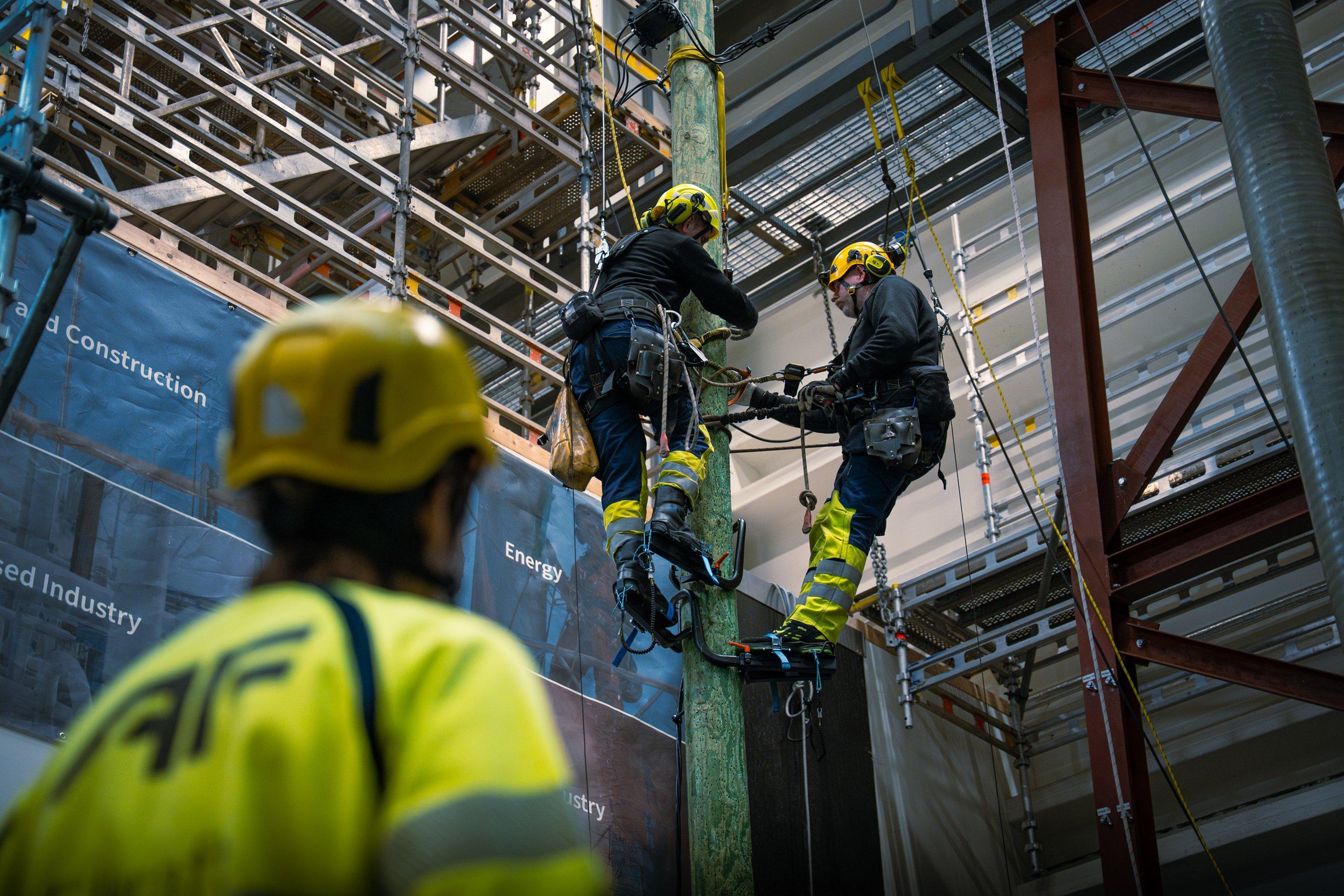
StS-ISONOR is the only training provider in Norway offering both composite and wooden utility poles indoors in our training hall in Bergen.
The poles are 8 metres high and include realistic obstacles, allowing participants to train under conditions that closely resemble real-world pole climbing, self-rescue, and co-worker rescue scenarios.
Ensure your safety and competence with our Annual Rescue Lowering Training!
If you work in poles or masts, Norwegian authorities require documented annual practice in rescue lowering. Your employer is responsible for ensuring that you receive updated training in both self-rescue and co-worker rescue.
This course provides repetition and hands-on training for personnel who already have documented training in climbing and rescue in poles or masts.
The course is carefully designed to meet the requirements in Section 7 of the “Regulations on Safety Related to the Maintenance and Operation of Electrical Installations” (FSE).
This ensures that you receive the correct and mandatory training required for lowering an injured person safely from height.
Target Group
This Annual Rescue Lowering Training is tailored for personnel who already have documented training in climbing poles and masts, including:
- Electrical workers
- Telecom personnel
- Other professionals working in poles, masts, or similar structures
Prerequisites
Participants must have previously documented training in climbing poles or masts.
Entry Requirements
- Documented prior training in pole/mast climbing
Certificate Validity
- Course certificate is valid for 12 months
- All necessary equipment is provided by StS-ISONOR
Duration: 4 hours
Location
Sandbrekketoppen 30, Midttun
On request, the course can also be delivered at the customer’s location.
What You Learn
This course covers the annual training requirements set out in FSE §7, which states that personnel performing work in poles or masts must receive documented annual practice in rescue lowering.
Theoretical Training (Repetition)
You repeat:
- Legislation, regulations, and standards
- Risk assessment (Safe Job Analysis – SJA)
- Inspection, storage, and correct use of personal fall protection equipment
Practical Training
You practise:
- Self-rescue
- Co-worker rescue (lowering an injured or incapacitated colleague)
Training includes realistic scenarios using both composite and wooden poles in our indoor training hall.